
In forex trading, many traders are always searching for something that can make their work easier. They want a powerful tool that can predict market movements and give clear trading signals. This demand has led to the rise of fake forex indicators risk management problems across the forex market.
At first, these indicators look very attractive. They show high win rate, strong profits, and almost no losing trades. But behind this, there is a big risk. These tools often create a false sense of confidence and slowly damage both trading psychology and risk management.
Why Traders Fall for Fake Indicators
The forex market is part of global financial markets, and it is always changing. Market movements depend on many factors like news, demand, and market dynamics. Still, many traders believe that one indicator can predict market movements perfectly.
This belief is common among novice traders. They join a trading platform, test some indicators on historical data, and feel confident when they see good results. But they forget that past performance does not guarantee future results.
Most traders do not take time to understand market analysis or market conditions. Instead, they depend on ready-made trading signals and expect consistent profits without effort.
The Problem of False Confidence
Fake indicators build false confidence slowly. When traders see positive performance metrics like high reward ratio, strong sharpe ratio, and fewer losing trades, they start trusting the system too much.
This false confidence affects trading behaviour in many ways:
- Traders stop using proper risk management rules
- They ignore stop loss
- They increase position sizing without thinking
- They take impulsive decisions
Trading psychology refers to how psychological factors and emotional responses affect trading decisions. When traders depend on false signals, their rational thinking becomes weak.
They begin to believe that every trade will be successful, which is not true in real market conditions.
How Risk Management Gets Destroyed
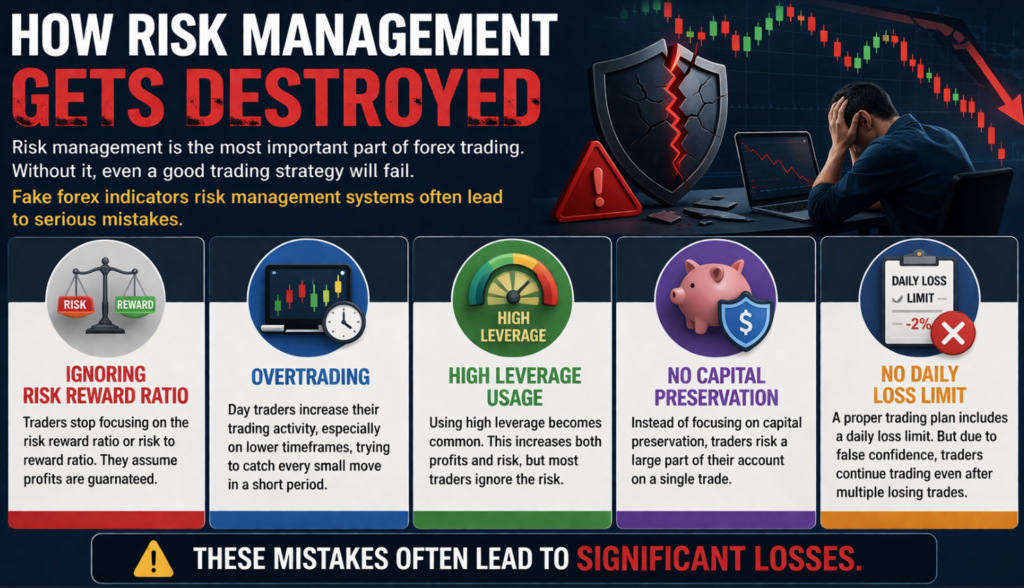
Risk management is the most important part of forex trading. Without it, even a good trading strategy will fail.
Fake forex indicators risk management systems often lead to serious mistakes.
Ignoring Risk Reward Ratio
Traders stop focusing on the risk reward ratio or risk to reward ratio. They assume profits are guaranteed.
Overtrading
Day traders increase their trading activity, especially on lower timeframes, trying to catch every small move in a short period.
High Leverage Usage
Using high leverage becomes common. This increases both profits and risk, but most traders ignore the risk.
No Capital Preservation
Instead of focusing on capital preservation, traders risk a large part of their account on a single trade.
No Daily Loss Limit
A proper trading plan includes a daily loss limit. But due to false confidence, traders continue trading even after multiple losing trades.
These mistakes often lead to significant losses.
The Role of Trading Psychology
Trading psychology is often ignored, but it plays a major role in success. Many traders fail because they cannot control their emotions.
Some common problems include:
- Revenge trading after losing trades
- Confirmation bias when looking at charts
- Mental shortcuts instead of proper analysis
- Impulsive actions without a written plan
These issues are connected to cognitive biases and mental patterns that affect decision making.
Self awareness is important. Every trader should understand their trading behaviour and emotional responses.
Demo Account vs Live Markets
Many traders feel confident after using a demo account. In demo trading, there is no real capital at risk, so emotional pressure is low.
But in live markets, everything changes. When real money is involved, traders react differently. They make impulsive decisions and forget their trading plan.
This is where fake indicators fail the most. They may look good in testing, but they cannot handle real market conditions.
Warning Signs of Fake Indicators
It is important to identify warning signs early. Some common signs include:
- Promises to predict market movements perfectly
- Claims of very high win rate
- No losing trades shown
- No forward test in live markets
- Works only on lower timeframes
- No clear trading strategy
A genuine system will always show both profits and losses.
Practical Strategies to Avoid Losses
To survive in forex trading, traders need practical strategies.
Follow Risk Management
Always control your risk. Never risk too much on a single trade.
Use Stop Loss
Stop loss is necessary for protecting your account and avoiding big losses.
Maintain a Trading Journal
A trading journal helps track trading activity, performance metrics, and emotional responses.
Build Systems
Do not depend on others. Build systems based on your own understanding of the market.
Test Before Trading
Always forward test your strategy in live markets before using real capital.
Stay Extremely Cautious
Be careful of any tool that promises easy profits.
Stop Trading When Needed
If you face continuous losses, it is better to stop trading and review your strategy.
Importance of a Written Trading Plan
A written plan is very important for every trader. A good trading plan includes:
- Entry and exit rules
- Risk reward ratio
- Position sizing rules
- Daily loss limit
- Clear trading strategy
This helps in better decision making and avoids impulsive actions.
Understanding the Real Market
The forex market is complex. Market movements depend on many factors, and no indicator can fully control it.
Traders should focus on:
- Market analysis
- Higher timeframe trends
- Understanding market behaviour
- Using other indicators as support tools
Successful traders do not rely only on indicators. They combine strategies, experience, and discipline.
Final Thoughts
Fake forex indicators create a false sense of success. They give traders false confidence and damage both trading psychology and risk management.
In this dynamic world, success in trading is not about predicting every move. It is about managing risk, controlling emotions, and making smart decisions over time.
Every trader should focus on learning, staying disciplined, and following proper strategies instead of chasing shortcuts.
FAQs
- What are fake forex indicators?
Fake forex indicators are tools that show perfect results using historical data but fail in live markets. - How do fake indicators affect trading psychology?
They create false confidence, leading to poor decision making and emotional trading behaviour. - Why is risk management important in forex trading?
Risk management helps protect your account and ensures long-term survival in the market. - What is revenge trading?
Revenge trading is when traders try to recover losses quickly by taking impulsive trades. - How can traders avoid fake indicators?
By focusing on market analysis, using a trading journal, following a trading plan, and testing strategies properly.